Sustainable Landscaping for Commercial Properties
Sustainable Landscaping for Commercial Properties: Smart, Beautiful, and Built for the Future
Across the DC, Maryland, and Northern Virginia region, commercial property managers are rethinking how their landscapes can support long-term value, environmental responsibility, and a better experience for those who live, work, and visit every day. Sustainable landscaping has become one of the most effective ways for property owners to create outdoor environments that are attractive, resilient, and financially practical over time.
At Complete Landscaping Service, our team of landscape designers and field experts work with commercial properties of every size to create landscapes that support the local ecosystem, streamline maintenance, and align with budget goals. Today, sustainability isn’t just a buzzword—it’s a highly strategic, cost-effective approach to building outdoor environments built for future growth.
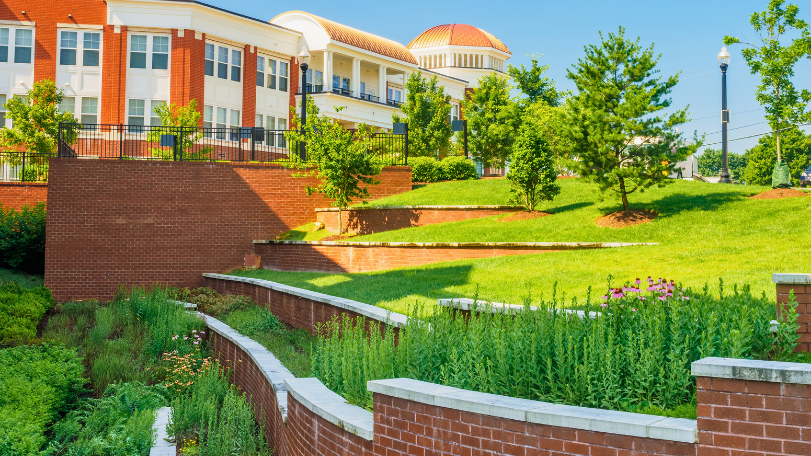
Why Sustainable Landscaping Has Become Essential
Sustainable landscaping starts with a simple principle: your landscape should work with nature instead of against it. When that happens, everything else becomes easier—maintenance, budgeting, plant health, and overall site performance.
Commercial properties across the region are facing familiar challenges: rising maintenance bills, unpredictable weather patterns, drainage concerns, and higher expectations from tenants, residents, and visitors. Sustainable landscaping helps solve these challenges through:
-
Better handling of stormwater runoff and surface water
-
Lower monthly and annual maintenance costs
-
Reduced pressure on your irrigation systems
-
Improved soil structure and consistent soil moisture
-
A more reliable schedule for routine maintenance
For property types like HOAs, apartment communities, hospitals, office parks, retail centers, and educational institutions, the payoff is both immediate and long-term: fewer emergency fixes, healthier plant material, and a landscape that naturally supports itself over time.
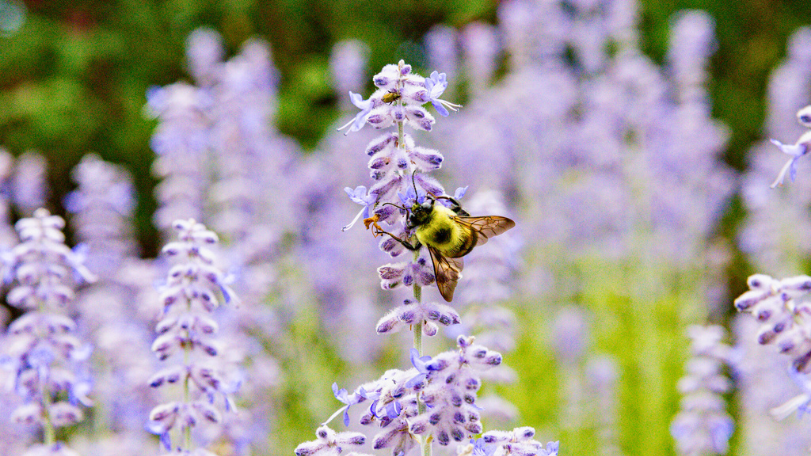
Native Plants and Smarter Planting Design
One of the biggest advantages of sustainable design is the opportunity to use native plants. These species are naturally adapted to our Mid-Atlantic local climate and require far fewer inputs than non-native varieties. That means less water, fewer chemical treatments, and significantly fewer regular maintenance tasks throughout the year.
Native plant landscapes offer benefits such as:
-
Enhanced pest and disease resistance
-
Strong performance during drought, heat, and seasonal shifts
-
Natural water conservation
-
Higher survival rates, reducing replacement costs
-
Improved biodiversity and support for pollinators
For property managers looking for professional landscaping that balances beauty with practicality, native plants provide consistent performance with minimal operational strain. And combined with thoughtful plant grouping—lining walkways, framing entrances, or softening large turf areas—they create lasting visual interest without increasing workload.
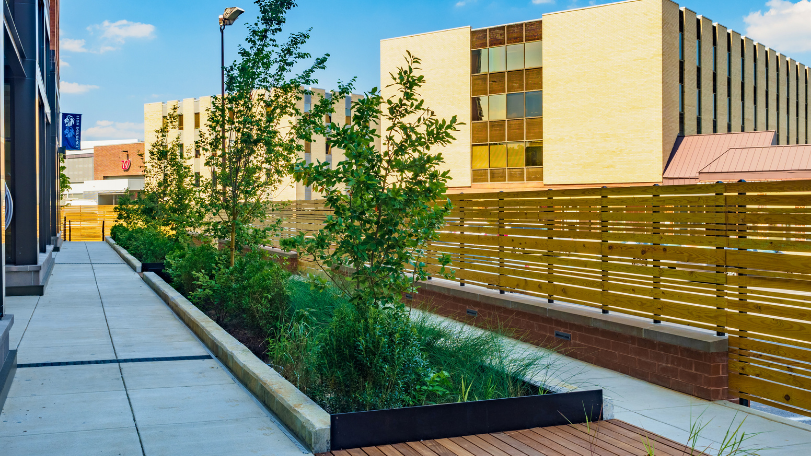
Stormwater Management That Works With Nature
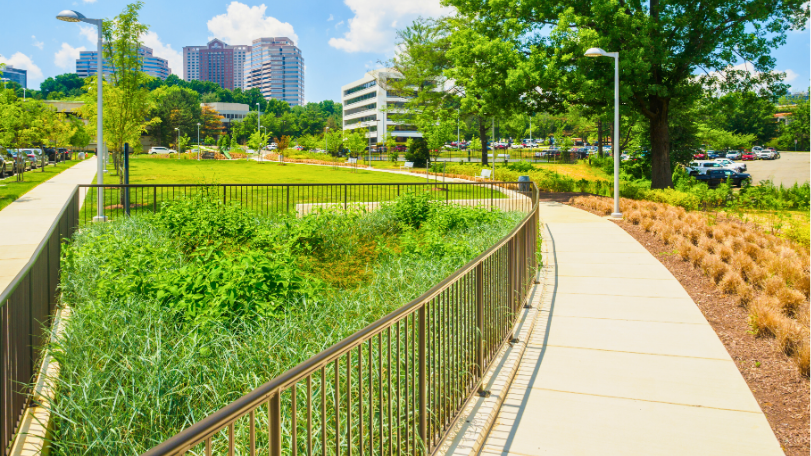
Many commercial properties struggle with drainage challenges—from erosion issues to saturated turf to pooling water in parking lots. Sustainable design creates solutions that guide water rather than fight it, using natural systems to manage flow and reduce pressure on hardscapes and storm drains.
Features like rain gardens, permeable pavers, vegetated buffers, bioswales, and re-graded areas help:
-
Capture and filter surface water before it enters waterways
-
Control stormwater runoff during heavy rain
-
Reduce erosion and protect buildings and pavement
-
Improve site safety by reducing ice formation in winter
-
Keep outdoor spaces usable even after storms
These systems also elevate the appearance of the landscape, adding texture, structure, and seasonal color. For many commercial landscaping companies, incorporating stormwater solutions has become essential as the DMV sees more frequent severe weather events.
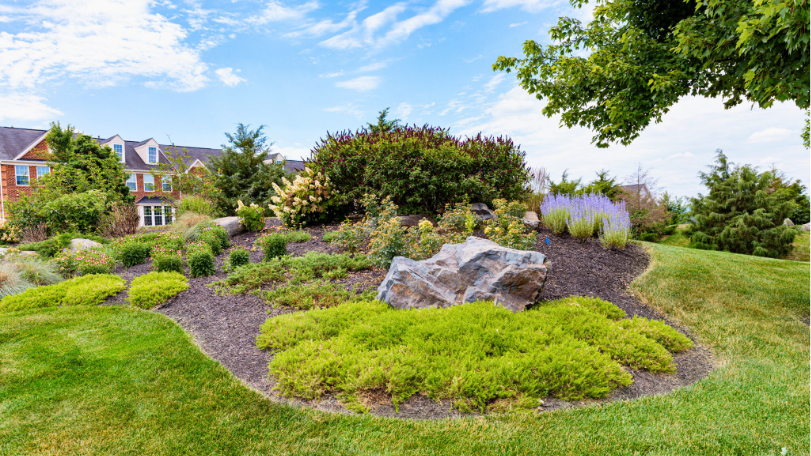
Efficient Irrigation Systems Built for Today’s Weather Patterns
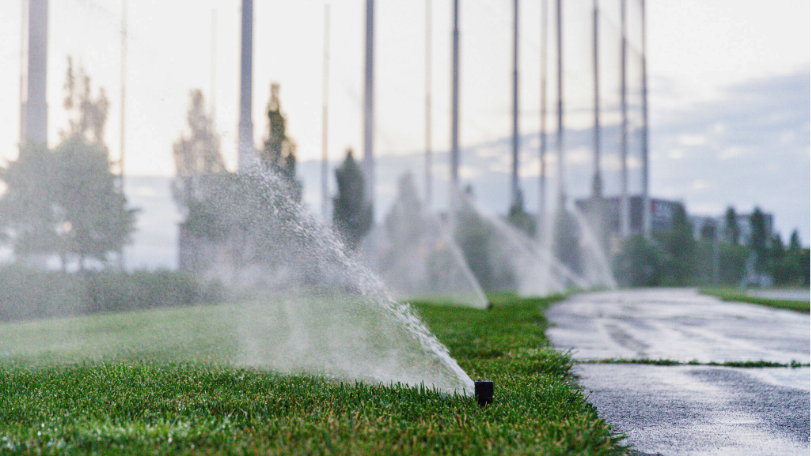
Water efficiency is one of the most impactful components of sustainable landscaping. Modern irrigation systems, including smart controllers, drip lines, and soil sensors, allow properties to water more accurately and responsibly. These systems help managers monitor soil moisture, weather forecasts, and seasonal shifts, ensuring that plant material receives exactly what it needs—no more and no less.
Smart irrigation supports:
-
Consistent water conservation
-
Extended system lifespan due to reduced overuse
-
Lower monthly utility costs
-
Reduced plant stress and disease
For properties spanning multiple buildings, courtyards, or large open areas, these improvements offer immediate operational savings and long-term reliability.
Building Sustainable Planting Beds and Soil Systems
A truly sustainable landscape starts below the surface. For commercial properties across the DMV, the health of the soil determines how much water plants need, how well they withstand heat or foot traffic, and how often property managers must handle replacements or unexpected maintenance tasks. By designing planting beds that prioritize soil improvement and long-term ecological balance, property owners gain outdoor spaces that are resilient, attractive, and far easier to maintain.
Sustainable soil systems focus on organic matter, proper drainage, and techniques that allow plant roots to develop deeply and naturally. Mulching with shredded hardwood or leaf compost reduces evaporation, regulates temperature, and increases soil moisture, creating stable conditions even during dry periods. Incorporating native plants—already adapted to our local climate—further reduces the strain on irrigation systems and supports healthy biodiversity above and below the soil line.
For large campuses, HOAs, retail centers, and multi-family communities, investing in these soil-based strategies results in healthier landscapes that demand fewer inputs, minimize plant loss, and reduce long-term maintenance costs. When paired with smart design and environmentally conscious materials, sustainable planting beds become a foundational element of a landscape that is both beautiful and genuinely built for the future.
The Long-Term Benefits of Sustainable Landscaping
Sustainable landscapes age gracefully. They require fewer interventions, respond better to weather extremes, and provide stable annual budgeting, something every property manager appreciates. With healthier soil, better stormwater performance, and reduced reliance on chemicals or excess watering, these landscapes consistently outperform traditional high-maintenance designs.
It’s one of the reasons more commercial landscaping companies are shifting toward sustainability-focused service models.
Partner With Complete Landscaping Service to Build a More Sustainable Future
Complete Landscaping Service has spent more than 40 years supporting commercial properties throughout the DMV with thoughtful design, expert installation, and dependable maintenance. Whether you want to rework planting beds, upgrade irrigation, add natural stormwater solutions, or redesign your outdoor spaces entirely, our team can help you create a landscape that is rooted in sustainability—and built for long-term success.